
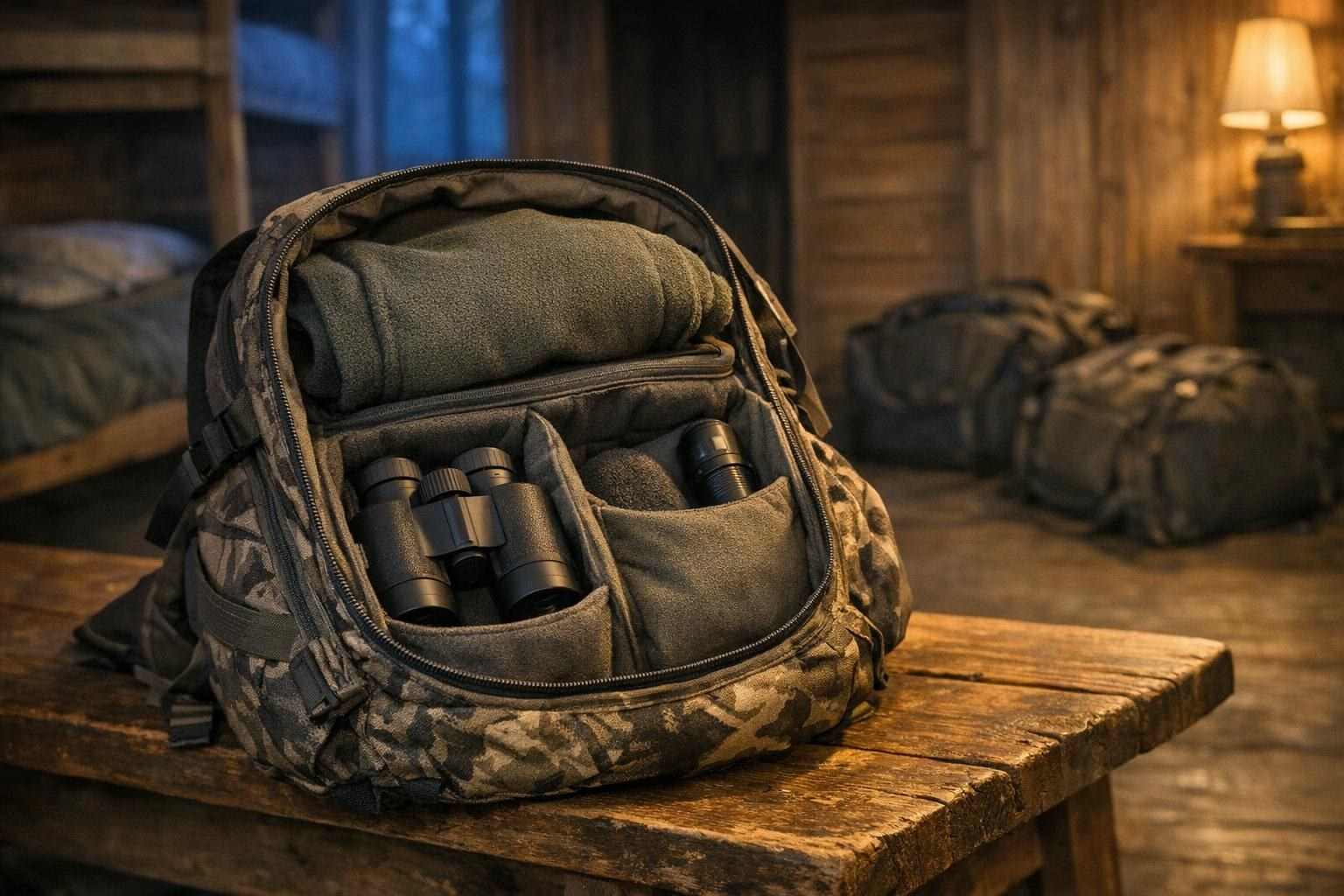
Make sure all of your gear is ready to leave before the lodge goes to sleep. This can be a challenge when trying to balance being prepared for your hunt with being considerate of other guests. Loose buckles, noisy bags, bright lights, and last-minute searches for missing gear all can disturb other guests. Develop a routine to ensure you are leaving on time and that you are focusing on making safe, legal, and ethical decisions while in the field. You don't have to bring everything. Determine what you need to have access to, what you can leave behind, and verify with your guide what he needs you to bring and check before you retire for the night.
Build a departure-ready kit before dinner
You would pack all your clothes, foot gear, optics, licenses, water, food, first aid kit and all other personal items the night before in an organized fashion so that everything can be found easily before you leave for your early morning hunt. Refer to the trip list that your guide provided for all the items you may need for your hunt. Also verify with your outfitter and local authorities as to current hunting regulations for the location, time of year, species and other items that may be required.
Pack the same items that you need for the first stop of the day in the same place. A small daypack or even a soft-sided bag is quieter than several hard-sided cases. Pack frequently used items at the top of the pack. Be careful not to expose fragile optics, electronics and weather sensitive items to items that may get dirty, wet, muddy or even smelly. Keep these items separate from sleeping gear and clean clothing.
Don't use the night before to try out new gear. That includes new hiking boots, layers, etc. Pack your gear carefully to avoid discomfort and to avoid noisy items that could wake up others in the lodge when you get up in the middle of the night to slip out to head out to the field.
Choose layers for movement, not bulk
Simple layering is the basis of quiet hunting clothing. Layering means using clothing that fits well and can be easily added to or removed as required without making a sound. A system of simple layers should be chosen with the guide's advice on what is best for each location and activity.
Secure any Velcro, snaps, stiff plastic, etc. before you go to bed. Remove any tags from newly purchased clothing items. Put any small items in a soft garment bag or pouch to prevent items from rubbing against each other in your pack.
Do not swap comfortable footwear for quieter options in order to move about more quietly. By all means choose appropriate footwear, however ensure that it is already comfortable before you depart for your trip and pack it in a place where it can be easily located the next morning.
Arrange the room for a clean exit
Remember also that there are others around you. Try to pack your bags so that they are ready to go and do not need to be moved. Try to keep your clothing for the day spread out in a chair rather than on the floor. And, try to leave doors, drawers, etc. in the same state as you found them.
An early alarm can be set to the least obtrusive setting and left near enough to turn off instantly. Avoid setting an alarm to repeat, turning on loud notifications or switching on a brilliant illuminating device. Dimmest lighting possible can be provided by a small flashlight with dimmest setting. Although useful, even this should be switched off and pointed at the floor where possible. It's better to ask the householder about expected times for lights to be switched off, shower use, coffee making and departure time than work on the basis of your own needs.
Even if you have rented a private room, remember that you are in a hotel. Keep the volume down for phone calls and TV watching. Sound travels through walls and down corridors.
Keep the final checks short and deliberate
Having a list to check helps prevent searching for missing items when others have already departed. Include on the list items like: ID and required documents; communication; weather and wet gear; water; food for extended hunting trips; first aid supplies; special items requested by your hunting guide for that specific trip. Check the batteries for any needed to be charged prior to retirement and put the devices in their cases to prevent accidents like being turned on in your bed.
If you are going to need firearms or other hunting equipment for your trip, be sure to follow your guide's instructions for transport, storage, etc. as well as all current laws for said items. Laws can change frequently in jurisdictions so be sure to check current official guidance for required procedures before you head out. Don't attempt to do a safety check and then quickly rush to get ready because others are waiting for you. Also, never load, unload or handle equipment of this nature in your bedroom or any other inappropriate location.
The guide for your outing is your best bet for any last minute questions for the area and activities you'll be doing for the day and night. Ask them any last minute questions you may have the night before instead of trying to figure them out at first light.
Reduce scent, light, and unnecessary noise
Additionally, many items which one brings on a trip can and do produce strong odors, or make loud noises. Packaging of these items should be done in the best possible way to prevent leakage or other types of accidents. In addition, items such as toothbrushes, towel, etc. should be placed in soft bags, and so forth.
Don't test your toughness by struggling in the dark. Instead, use a safe light to move around and do your best in poor visibility. Remember, tripping, falling or breaking something can cause a lot of problems on a trip. Apply the same logic to your outdoor adventures and follow your guide's instructions regarding safe navigation.
Same applies for your food and drinks. Pack your liquids in sealed containers. Instead of packed bags of snacks search for them in soft folded containers within your packs. It is also good practice to confirm details for breakfast and your departure with your guide the night before.
Leave room for ethical field decisions
Be prepared for what you expect to encounter. But recognize that the weather, behavior of animals, visibility, terrain and even access can all be different than what you were told to expect. Don't pack unnecessary gear hoping to encounter something that your guide hasn't told you about and that is prohibited.
Don't try to be another hunter when you are out on a trip for the day. A responsible hunter can be prepared for almost any situation but they must also be able to make a decision within a split second to pause or stop and re-evaluate a situation. If required by the trip and the guide, identify how to handle a wounded animal, what to do with evidence of illegal activity, how to best pack out waste from the field, and what are the areas that are best left sensitive and / or undisturbed. Also ask about any sensitive areas that the guide would like you to avoid during your time in the field.
Conservation of nature also extends into your behavior at the Lodge. Be sure to pack out what you brought in. Make good use of shared resources and report any damaged access routes or other deteriorations of the Lodge and field to the proper authority. Also, be sure to report any evidence of illegal activity such as poached game. Be a considerate guest and make sure that the sleeping area is left in good order for other guests. The field should be left in as good of condition or better than it was found.
Use a repeatable night-before routine
This same useful process can be repeated the following night. You should be able to head to bed in an organized manner without having to think too hard about what to do the next night. Write down a simple checklist by the appropriate bag.
The end of packing also is worth a note here. You do not want to be going round and round to check something for the hundredth time and possibly even to lose it. This can best be avoided by making a short to-do list and putting it next to the corresponding bag.
Leave the lodge early enough to get there organized and on time. Help to make the evening in the lodge a quiet time, enable the guide to deal with a well-informed party of hunters and make good decisions in the field.